
JCPM2026.08.18
The following is an edited transcript of the Journal Club with Pearls & Marketing (JCPM) of August 18, 2026, with Charles Runels, MD.
>-> The PDF transcript of this live journal club can be seen here <-<
Topics Covered
- Revisiting a Study We Have Covered Before
- They Changed Where We Inject on the Anterior Vaginal Wall
- Let Me Show You the Picture: The Sphincter Is Midline
- What Their Paper Says About Sexual Function and Desire
- Three Reasons Their Sexual-Function Results Were Lower
- How Our Original O-Shot® Study Was Actually Done
- The Woman Whose Husband Could Not Keep Up
- Still Grateful for the Research — But Not an Apples-to-Apples Comparison
- Why It Matters: This Paper Is Being Cited to Underestimate Us
- On to the Next Paper — and a Word About Zotero
- When Cosmetic Work Helps Every Other Part of a Life
- The Maid, the Syringe of Juvederm, and a New Life
- Why I Stopped Thinking Cosmetic Work Was Beneath Me
- Botulinum Toxin for Depression and the Facial Feedback Loop
- Why I Book Thirty Minutes for a Toxin Appointment
- The Simple Email You Can Send This Week
- They Often Bring Someone With Them
- Beyond the Needle — and the Last Paper: Alopecia Areata
- Secret Shop Your Own Website
- A Preview: Karina’s Step-by-Step Manuals
- Closing: Five Minutes, No Side Effects, and Help for Depression

Charles Runels, MD
Author, researcher, and inventor of the Vampire Facelift®, Orchid Shot® (O-Shot®), Priapus Shot® (P-Shot®), Priapus Toxin®, Vampire Breast Lift®, and Vampire Wing Lift®, & Clitoxin® procedures.
Transcript
Charles Runels, MD: Welcome to our webinar. We have three papers today.
Revisiting a Study We Have Covered Before
This one we’ve talked about before, but I wanted to bring up something I missed the first time.
So this was a beautiful study where they actually —if you look at the references —were kind to us and cited our papers.1 They showed that injecting PRP there, in those three places (see the video), helped with incontinence.
But even though the paper was about incontinence, they measured sexual function too.
They Changed Where We Inject on the Anterior Vaginal Wall
So the reason that I brought this up, even though this study came out a while ago, is that this paper was referred to by another paper talking about PRP for sexual dysfunction in women. And because they referred to this paper, they underestimated what we’re able to do.
Let me show you in detail. They injected three places on the anterior vaginal wall, and so they changed our procedure regarding where they are injecting (see the video).
Let Me Show You the Picture: The Sphincter Is Midline
Let me show you the picture.
The urethra is there (see the video). So, in my opinion, going here and here; again, these are smart people, and they published a research paper that helped us. But going here and here would be, as best I can tell, not really doing anything for the urinary sphincter, which is right there, midline.
=> Apply for Online Training for Multiple PRP Procedures <=
The other thing, they did not inject the clitoris (which we do in our O-Shot® protocol)2, so I’m talking about the sexual function part.
What Their Paper Says About Sexual Function and Desire
You see, they reference our original paper from 2014.
They quote, they say, “An improvement in stress urinary incontinence symptoms readily enhances sexual desire.”
So helping with incontinence can have the side effect of helping sex.
Sexual function is intimately related to urinary incontinence. So they are saying just because you fix the incontinence, that should help make the sex better, but not enough.
But their results for sexual function were less than what we demonstrated. There are three possible reasons for this difference.
Three Reasons Their Sexual-Function Results Were Lower
First, as I pointed out, they did not inject the clitoris.
Second, in my opinion, much of where they injected was different from what we did, so it was not as effective.
Third, they did not activate the PRP with calcium chloride.
So they did not do an O-Shot®.
They did something good, but it wasn’t an O-Shot, and perhaps it wasn’t as good as it could have been.
How Our Original O-Shot® Study Was Actually Done
There’s something that may surprise you.
The way that we did this study3 is I had a patient who had retired from the FDA, a real smart lady, and I had done something to make her better physically that she considered me saving her life, and she offered to help me do something, just give her anything.
And I said, “Okay, I’ve been doing this procedure. Just go through my charts and find people that have had an O-Shot® and did both FSFI and female sexual distress surveys at time zero and somewhere close to three months out, and just add it up and see what you get.”
And then I had a couple of other people add someone to the study, and Dr. Melnick was kind enough to help us write the paper.
But I didn’t my helper anything about pre-qualifying the people in the survey/study. So if you look at some of the people pre-shot, remember distress is 11 or more. Pre-shot, we had one person at a level of one, which means this lady’s having crazy good sex. A two, a seven, a three. So there’ s one, two, three, four people in the study who were not even distressed.
The Woman Whose Husband Could Not Keep Up
That would skew your study.
And I actually, I asked this woman after we published it, figured out who she was, and asked her, “Why did your stress go up?”
She went from a one to a two, which is slightly more distressed, although still having great sex.
And she said, “My sex drive went up so much my husband was having trouble keeping up with me, so I was frustrated.”
Her satisfaction went down for that reason, and her stress went up, not that her body wasn’t working, but because her spouse couldn’t keep up.
So had we pulled those four out, of course, it’d have made the study smaller, but our results would have been even greater, and they were in the study that my wife and I published years later.4
Still Grateful for the Research — But Not an Apples-to-Apples Comparison
But my point is, this study, this one right here,5 which was looking at incontinence, said that their con- their results for the female sexual function index showed less improvement than what we saw.
 But what we saw was a different procedure. And even though four of the 11 didn’t have distress, we still showed a significant increase that was greater than what this study showed for incontinence, where they didn’t activate the PRP.
They changed the anterior vaginal wall procedure, and they did not inject the clitoris.
And again, didn’t really matter; they still showed benefit. I was still proud of their research because it showed effectiveness for incontinence. But it was definitely not an apples-to-apples comparison on the sexual medicine side.
Why It Matters: This Paper Is Being Cited to Underestimate Us
And the reason I wanted to bring it up is that this paper is being referred to —or their conclusions about the sexual function part have been referenced — in subsequent articles, one last week about —that we covered last week —the response to PRP.6
So I think the most accurate one is not even this original paper, which included non-distressed people.
Probably the most accurate one at this point is the one that Alex and I did more recently.7 This is probably more in line with what you’ll see.
Okay, let’s see. A couple more papers, and then let’s see if Karina’s got her
On to the Next Paper — and a Word About Zotero
Okay, so let’s cover this other paper.
Oh, by the way, just to remind you, I use Zotero, Z-O-T-E-R-O. It’s absolutely the best way to keep your studies organized.
When Cosmetic Work Helps Every Other Part of a Life
This one just came out and talks about how our cosmetic work helps people in other areas of their lives.8
And this one’s open source, so you can share it with your people.
My first experience with this was a patient I treated early on, and at that time I was mostly just offering it to people who had lost weight to keep them engaged with my weight-loss program, because, of course, their faces look older when they lose the adipocytes in their cheeks.
The Maid, the Syringe of Juvéderm, and a New Life
And then I had a woman who had a syringe of Juvéderm from me and came back, I don’t know, six months later or something like that, and told me that she had been raped about a week before she got that procedure done. And she had saved up the money that she spent mopping floors as a maid. And that after she got the Juvéderm, her husband, who had facilitated the rape, I won’t tell you details, but it was ugly.
=>Next Hands-On Workshops with Live Models<=
She, after the Juvéderm, had a boost in self-confidence, enough that she divorced her husband, got a new, better-paying job as a receptionist, and was working part-time as a fitness model.
And she came back to thank me, got some Botox, and thanked me for that one syringe that she saved money for quite a while.
Helping her whole life get better.
Why I Stopped Thinking Cosmetic Work Was Beneath Me
Till then, I was jaundiced of considering cosmetic work. I thought if you’re a real doctor, this is beneath you. After that, I became humbled and more clear about how important this sort of work is, cosmetic work, and became very passionate about it, and never looked back. And over and over again, if you’re doing this, you know it helps people become more confident.
It helps them with their work and the– and with their family, and they’re less sad. It’s just wonderful what happens, and it’s the easiest, simplest thing to do. Just to remind you too, here, if you… I’ll show you some of them, but if you look at botulinum toxin, here’s a number of papers.
Botulinum Toxin for Depression and the Facial Feedback Loop
These are some of the papers, my favorites, of botulinum used for depression.9 It has to do with facial feedback loop.10 If you read my Botox course, you know the theories about why that might work, regarding facial feedback and autonomic modulation.11
So Botox blocks that feedback loop so that when you feel sad, your muscles are not able to express sadness. The omega sign is what Darwin called it. And since they can’t express it, the muscles still think they’re happy, which tells your brain, “Oh, you’re mistaken. We’re not sad. We’re happy.” And it blocks this cycle that would normally spin down in from a cold emotion to a hot emotion.
In other words, it gets worse, and it’s a deadly cycle. So that, that’s the idea of how to bre– why it might help depression. But if you’re doing this, you know you’ve had people tell you how they get their Botox, and they feel happier. Okay. I guess maybe it’s helping their migraines if they have those too.
The Simple Email You Can Send This Week
But here’s a more recent study. So I would… Nope, that’s not it. I would take this study.
This one, and I’ll give it… I’ll go ahead and put it in the chat box. But I would take this one, put it in a link to it in an email and say, “Hey, if you’ve noticed that you feel more confident and more happy after your cosmetic work, it’s not your imagination. Here’s research that shows that it can help.”
And actually, my wife used this as a reason to stay open, one reason, during COVID, because people were sad, and we have research showing that this makes them less. Even double-blind studies in people that have failed to respond to oral antidepressants. This is strong, and the research is mounting. Let me give you this one to put so you’ll have it before I think about it.
Definitely put a link to this in a, in just a simple little email. And it could be that short, “Hey, I just read this, and if you, if you’ve noticed you feel happier after your cosmetic injections, it’s real. Here’s research showing that it’s real. If you wanna make an appointment, here’s our number.”
Why I Book Thirty Minutes for a Toxin Appointment
And you’ll have some people call and make appointments. They may even bring a friend with them. By the way, I usually do
I usually book my Botox and appointments for 30 minutes. There are a couple of reasons to do that, even though you can complete a treatment in about five minutes.
One is that I want to have a chance to get to know the person a little better every time they come to see me.
They Often Bring Someone With Them
But more importantly, or as importantly, they will often bring someone with them.
Just this past week, a lady came to see me, and she brought her daughter.
The daughter told her (after finding out her mother was coming to see me), “Oh, why are you going without telling me?”
And the mother says, “Just come with me. Dr. Runels won’t mind.”
And she’s right, I didn’t.
I have quite a few people who come; Mother, daughter, couples who come together, and it’s, it makes for a happy, fun visit. And it’s a good mother-daughter outing. They often come to get their facial cosmetic work done with me, and then they’ll go out to lunch or something.
I usually book 30-minute toxin appointments, so I have time to consult with them about other things and treat their friends and family if they come with them.
Beyond the Needle — and the Last Paper: Alopecia Areata
Let’s see in this one. Okay, I’ll just put it in the material section titled Beyond the Needle, and you can send that out.
Then this last one, and then I’ll open it up for questions, has to do with alopecia areata. I’ll put a link to it in the chat box. This is one I couldn’t figure out how to give them their money to buy the article.
Secret Shop Your Own Website
You should be secret shopping your website because if people are having trouble giving you money, you won’t know it. They’re not going to tell you, most likely. But there are a couple of online research sources I just can’t get to take my money, so I wind up just having a link (maybe I could, but I’m not patient enough to spend an hour trying to figure out how to give someone my money, and neither will your patients).
With alopecia areata, we’ve got so many papers now about that helping,12 so now you have another one, and it’s, you have the link in the chat box.13
A Preview: Karina’s Step-by-Step Manuals
I’ll just give you guys a preview. Karina wrote– She teaches for us. She’s one of our most, busy teachers, always does a great course, and as a help to her students, she wrote some step-by-step manuals, and I said, “let’s offer it to our members.”
And of course, she wrote it. It’s all her. And so I’m going to let her charge whatever she wants.
She’s an excellent teacher, and she has a way of putting things that I think will be helpful to you. I’ll have it on the websites for the next time. Everything you need to know how to do our stuff is on the website, so you don’t have to buy her stuff. But I don’t know about you, but I’ll often buy three books explaining the same thing, or more, because each different way of telling it helps me understand it from a different perspective.
She’s been successful financially and medically and is one of the premier members of our group. So I haven’t seen the book yet. I can’t wait to get my hands on it, but I will be shocked if it’s not amazing. And she’s been giving it away to people who take her hands-on courses, which I highly recommend.
But she offered to make it available to our members, and I’ll have it for you at one of our upcoming journal clubs.
Closing: Five Minutes, No Side Effects, and Help for Depression
Okay, I don’t see any other questions. We’re at 25 minutes, so let’s call it a day.
Hope that was helpful to you.
Grab that link to the one about helping psychologically. Depression is a horrible thing. Most people experience it at least once in their lives. And if you can do something to help depression and simultaneously make their face look younger, without risk or side effects, and takes you five minutes in the office, we should all be talking about that.
Thank you for being on the call.
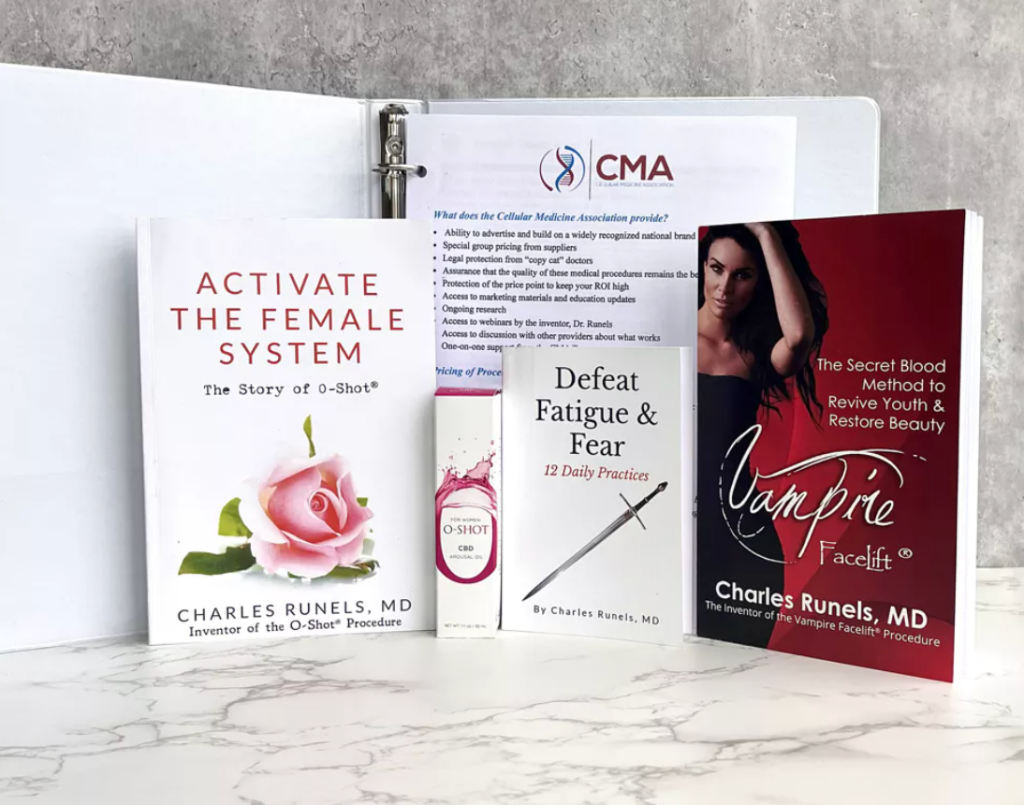
=>Benefits of the Cellular Medicine Association<=
=> Apply for Online Training for Multiple PRP Procedures <=
=>Next Hands-On Workshops with Live Models<=
References
Alam, Murad, Karen C. Barrett, Robert M. Hodapp, and Kenneth A. Arndt. “Botulinum Toxin and the Facial Feedback Hypothesis: Can Looking Better Make You Feel Happier?” Journal of the American Academy of Dermatology 58, no. 6 (2008): 1061–72. https://doi.org/10.1016/j.jaad.2007.10.649.
Anudeep, Talagavadi Channaiah, Madhan Jeyaraman, Sathish Muthu, et al. “Advancing Regenerative Cellular Therapies in Non-Scarring Alopecia.” Pharmaceutics 14, no. 3 (2022): 612. https://doi.org/10.3390/pharmaceutics14030612.
Atef, Lina Mohammed, Ghada Farouk Mohammed, Mohammed Saleh Al-Dhubaibi, Mahmoud Soliman, Saleh Salem Bahaj, and Yasser S. N. Saleh. “Hybrid High and Low Molecular Weight Chains of Hyaluronan for Clitoral Injection Is an Effective Modality Treatment for Increasing Female Sexual Satisfaction: An Interventional, Randomized-Controlled Parallel Study.” Sexual Medicine 12, no. 5 (2024): qfae067. https://doi.org/10.1093/sexmed/qfae067.
Aydogan, Mert. “Intralesional Platelet-Rich Plasma Injection in Patients with Recalcitrant Alopecia Areata.” SiSli Etfal Hastanesi Tip Bulteni / The Medical Bulletin of Sisli Hospital, 2025, 387–94. https://doi.org/10.14744/SEMB.2025.63444.
Davis, Joshua Ian, Ann Senghas, Fredric Brandt, and Kevin N. Ochsner. “The Effects of BOTOX Injections on Emotional Experience.” Emotion 10, no. 3 (2010): 433–40. https://doi.org/10.1037/a0018690.
Long, Cheng-Yu. “A Pilot Study: Effectiveness of Local Injection of Autologous Platelet-Rich Plasma in Treating Women with Stress Urinary Incontinence.” Scientific Reports, 2021, 9.
Michon, Alain. “Beyond the Needle: Psychosocial and Quality-of-Life Outcomes Following Facial Aesthetic Injectable Treatments.” JPRAS Open 51 (September 2026): 568–83. https://doi.org/10.1016/j.jpra.2026.07.031.
Moncrieff, Joanna, Ruth E. Cooper, Tom Stockmann, Simone Amendola, Michael P. Hengartner, and Mark A. Horowitz. “The Serotonin Theory of Depression: A Systematic Umbrella Review of the Evidence.” Molecular Psychiatry, ahead of print, July 20, 2022. https://doi.org/10.1038/s41380-022-01661-0.
Muhammad, Anjum, Sadaf Saleem, Shumaila Khan, et al. “Comparison of Efficacy of Autologous Platelet Rich Plasma Therapy With 5% Topical Minoxidil Spray in Treating Alopecia Areata: A Head-to-Head Assessment of Novel Approaches.” Cureus, ahead of print, June 7, 2024. https://doi.org/10.7759/cureus.61878.
Pototschnig, Hanno, and Maximilian T. Madl. “Successful Treatment of Alopecia Areata Barbae with Platelet-Rich Plasma.” Cureus 12, no. 4 (2020): e7495. https://doi.org/10.7759/cureus.7495.
Ramachandran, Roshni, and Tony L. Yaksh. “Therapeutic Use of Botulinum Toxin in Migraine: Mechanisms of Action.” British Journal of Pharmacology 171, no. 18 (2014): 4177–92. https://doi.org/10.1111/bph.12763.
Runels, Charles, Hugh Melnick, Ernst Debourbon, and Lisbeth Roy. “A Pilot Study of the Effect of Localized Injections of Autologous Platelet Rich Plasma (PRP) for the Treatment of Female Sexual Dysfunction.” Journal of Women’s Health Care 03, no. 04 (2014). https://doi.org/10.4172/2167-0420.1000169.
Runels, Charles, and Alexandra Runnels. “The Clitoral Injection of IncobotulinumtoxinA for the Improvement of Arousal, Orgasm & Sexual Satisfaction- A Specific Method and the Effects on Women.” Journal of Women’s Health Care 13, no. 3 No. 715 (2024). https://doi.org/10.35248/2167-0420.24.13.715.
Spindler, Archie, Derek Maas, Isabella Zappi, et al. “Alopecia Areata: Emerging Therapies and up-to-Date Management Strategies.” Journal of the American Academy of Dermatology 0, no. 0 (2026). https://doi.org/10.1016/j.jaad.2026.07.132.
Trink, A., E. Sorbellini, P. Bezzola, et al. “A Randomized, Double-Blind, Placebo- and Active-Controlled, Half-Head Study to Evaluate the Effects of Platelet-Rich Plasma on Alopecia Areata.” British Journal of Dermatology 169, no. 3 (2013): 690–94. https://doi.org/10.1111/bjd.12397.
Wollmer, M. Axel, Michelle Magid, Tillmann H. C. Kruger, and Eric Finzi. “The Use of Botulinum Toxin for Treatment of Depression.” In Botulinum Toxin Therapy, vol. 263, edited by Scott M. Whitcup and Mark Hallett. Handbook of Experimental Pharmacology. Springer International Publishing, 2019. https://doi.org/10.1007/164_2019_272.
Zamanian, Abbas, Atefeh GHANBARI Jolfaei, and Golnaz Mehran. Efficacy of Botox versus Placebo for Treatment of Patients with Major Depression. n.d., 3.
Zhang, Qilin, Wenqi Wu, Yuxin Fan, et al. “The Safety and Efficacy of Botulinum Toxin A on the Treatment of Depression.” Brain and Behavior 11, no. 9 (2021): e2333. https://doi.org/10.1002/brb3.2333.
Tags
PRP, platelet-rich plasma, O-Shot®, Orchid Shot®, Priapus Shot®, female sexual dysfunction, FSFI, Female Sexual Function Index, Female Sexual Distress Scale, stress urinary incontinence, anterior vaginal wall, clitoral injection, urinary sphincter, calcium chloride activation, injection technique, study design, patient selection, non-distressed subjects, Zotero, reference management, cosmetic medicine, Juvederm, hyaluronic acid filler, self-confidence, self-image, quality of life, botulinum toxin, Botox, depression, facial feedback loop, omega sign, autonomic modulation, treatment-resistant depression, double-blind studies, alopecia areata, corticosteroid, hair follicle density, patient education emails, open-access papers, thirty-minute appointments, referrals, family visits, secret shopping your website, membership materials, regenerative medicine, sexual medicine, marketing pearls
Helpful Links
=> Next Hands-On Workshops with Live Models <=
=>Next Hands-On Training with Live Models with Dr. Runels (includes marketing)<=
=> Dr. Runels Online Botulinum Blastoff Course <=
=> The Cellular Medicine Association (who we are) <=
=> Apply for Online Training for Multiple PRP Procedures <=
=> FSFI Online Administrator and Calculator <=
=> 5-Notes Expert System for Doctors <=
=> Help with Logging into Membership Websites <=
=> The software I use to send emails: ONTRAPORT (free trial) <=
=> Sell O-Shot® products: You make 10% with links you place; shipped by the manufacturer), this explains and here’s where to apply

[…] Training with Dr. Runels […]