
JCPM2026.06.02
The following is an edited transcript of the Journal Club with Pearls & Marketing (JCPM) of June 2, 2026, with Charles Runels, MD.
>-> The PDF transcript of this live journal club can be seen here <-<
Topics Covered
-
Every Week I Look for Bad News About PRP — and It Never Comes
-
Microneedling, the Skin Barrier, and Delivery Across Two Barriers
-
Peyronie’s Disease in Men Who Have Sex with Men: Xiaflex Fracture Risk
-
Peyronie’s Surgery: 15 Years of Data and New-Onset Erectile Dysfunction
-
PRP Is Not a Drug: Giving the Tissue Time to Grow
-
Photothermal Biomodulated PRP and the Many Ways to Change Your PRP
-
When You Can’t Buy the Paper: Secret-Shop Your Own Practice
-
Trichotillomania, Attention Deficit, and the Overactive Bladder Connection

Charles Runels, MD
Author, researcher, and inventor of the Vampire Facelift®, Orchid Shot® (O-Shot®), Priapus Shot® (P-Shot®), Priapus Toxin®, Vampire Breast Lift®, and Vampire Wing Lift®, & Clitoxin® procedures.
Transcript
Every Week I Look for Bad News About PRP — and It Never Comes
Welcome to our journal club. Into a new month, into the summer now — June the 2nd. Hope you’re enjoying the summertime. And we’ve had some studies lately talking about sunshine and recovery of skin, and today we’ve got, I think, interesting studies that support what we’re doing. Every week when I read the research, I think, “Oh, man, what if we find the study that says PRP is now some dangerous, horrible thing?”
And it just never happens. This logarithmic growth in indications and safety with PRP is just phenomenal. Thank you for being here, and I’ll plan to keep it to 30 minutes or less today, if we can. We’ll start with this one, about microneedling technology.
Microneedling, the Skin Barrier, and Delivery Across Two Barriers
I picked this one because I think all of us — and especially me, now that I’ve passed 60 years old — would really like to keep our brains.1 I had a dad who was so brilliant, so smart. And then I saw him: he was there, but his brain was gone. William Osler talked about that.
Where does the person go when they’re sitting there, but their brain is gone?
I don’t want that to happen to me. So I’m always looking for something new to prevent it, and it just so happened that this study — which is open source, and I’ll put it in your handout before we hang up — is a narrative review about delivery of drugs to the brain. It’s not original data, but they’re talking about systems engineered to take drugs across two barriers at once: the stratum corneum and, downstream, the blood-brain barrier.2
If you think about it, that’s really the purpose of our skin. Of course, one of its purposes is to protect us. I remember working in my ER days, when a man had come in — I can’t remember exactly what had happened, but there was a cut on his face from a beer bottle, and there was gravel, and he had HIV, and I was suturing him. That was a pretty common thing to have happen as an ER doctor.
I never really sweated it that much. I think the last time I looked at a study, there was only a one-in-a-thousand chance of transmission from a needle stick. But on your skin — even blood on your skin — because of that stratum corneum, we’re protected from so many pathogens.
I just got through swimming laps today, and I’m looking at it from my old ER/lifeguard/chemistry background. I’m pretty sure that this fancy pool in a cool club wasn’t up to par as far as chlorine and such. But whatever — if I’m not drinking it and I have a stratum corneum, I’m protected. So, just a reminder: we know this, but it’s worth bringing to the table: the main idea behind microneedling is that you break down that stratum corneum, so you’re able to have things absorbed that normally wouldn’t be absorbed through the skin.
=>Next Hands-On Workshops with Live Models<=
And if you can combine that with delivering drugs, that could also help. If it could help get them through the blood-brain barrier, then you might be able to treat Alzheimer’s disease. I’m not going to go too deep into that — I don’t think any of us are going to try to treat dementia with our RejuvaPen today.
But I like to keep track because there are so many people in our group developing their own intellectual property — their own books, their own franchises, all sorts of things (many of whom started by taking my hands-on workshops where I teach marketing/innovation). So this is just food for thought; it’s open source, so I’ll put it in there.
As far as our procedures go, it’s just a reminder that it aligns with the logic of applying PRP to freshly microneedled skin, as we’ve done with our Vampire Facial® procedure. So it’s not some hokey, black-magic thing to think you could get the growth factors from platelets to where they need to go by using microneedling.
That’s the carryover lesson from this paper, I think, as far as we’re concerned.
Peyronie’s Disease in Men Who Have Sex with Men: Xiaflex Fracture Risk
This next paper is about Peyronie’s disease in men who have sex with men.3 They’re looking at Xiaflex, or Clostridium histolyticum — which is basically a chemical surgery on the fibrotic tissue that’s causing the curvature — and asking what the results are, and how they change compared with the treatment of men who have sex with women. They had five centers.
It’s a retrospective cohort of men treated with intralesional Xiaflex.
Xiaflex is FDA-approved, but I’ve never gotten an answer (that feels satisfactory to me) to the following question: if it’s so wonderful, why was it pulled from the market in Japan, across Europe, and in Canada? I can’t find a major country where it’s still approved other than the US.It’s pulled from their formulary.
I don’t really know why, but I’ve always been a little bit worried about the fracture rate. It’s okay — you get a penile fracture; you get an implant; the world doesn’t stop turning. But it’d be nice to avoid that if possible. And then, to add to that argument, almost 10 years ago, Ronald Virag published a study in which he injected the plaque of men with Peyronie’s disease with a variation of our P-Shot® procedure (using PRP) and demonstrated better outcomes than seen with Xiaflex.4
So in this one, they thought, “Okay, what’s the difference?”
They broke them out by group, and there was a significantly higher fracture rate in men who have sex with men — 11.5% versus 1.3% in men who have sex with women. Now, the rate of fractures requiring operative repair didn’t differ significantly between the groups, so they’re appropriately cautious about what this means; it’s a relatively small number of events.
It’s three out of 26. But it’s still — that worries me.
Okay, if that’s all you have (Xiaflex), then great; let’s do it. But to me, Xiaflex should be second-line, not first-line. Ronald Virag’s study was in 2017 — I’ll include a link to it when I shoot out the email. He treated 90 men, with significant improvement: roughly a 40% reduction in the curvature. And other studies have since reported similar results, with zero major adverse events.
Zero!
A positive side effect was that they had a better erection — it went up around seven on that scale.
So when you put those two papers together: if I’m a man who has sex with men, I’m shooting for the P-Shot®. But I don’t know — I have to temper that, because I’m combining two different studies. Still, if it’s my penis and I have sex with men, I’m going with the P-Shot®.
One other thing: if you’re going with Xiaflex, of course, it’s multiple treatments, and if you’re paying out of pocket, it’s about $21,000 — versus quite a bit less for our P-Shot®, even if you did a series like Ronald Virag did.
For your patients who are men who have sex with men, they should see this study. (And this one was open source, too.) When you look at the number of people who have Peyronie’s, it’s surprisingly high — Population-based prevalence estimates are approximately 3–9%, increasing with age and exceeding 6% among men older than 70 years.5
And it’s the sort of thing that can really disrupt your life, because there’s pain — and I feel blessed that we have a procedure that can help with it. Okay, let’s see what we want to talk about next.
Peyronie’s Surgery: 15 Years of Data and New-Onset Erectile Dysfunction
Oh, this one — another Peyronie’s disease article.6
A nd this one, again, is about surgery. If this is all I have left, let’s do it. Let’s say we’ve tried Xiaflex and it didn’t work — hopefully, I tried the P-Shot® before that — and now it’s down to surgery. This is open source, and it’s strong data: 15 years of experience from a high-volume center.
There were 325 patients tabulated over 15 years. But the part that bothers me is that new-onset erectile dysfunction occurred in 22% of the men who were potent beforehand.
Now, among men with pre-existing ED, 35% improved after surgery. But if you started with good function, you had a 1-in-5 chance of developing new-onset ED!
On a multivariate regression, the main predictor was cardiovascular and metabolic comorbidity — not graft size, and not deformity complexity.
Those are your numbers right there. As far as we’re concerned, it reinforces our P-Shot® story, because erectile function, of course, is a window into your vascular health.
And now you have this 325-patient study showing comorbidity, and you’ve got a one-in-five chance that the surgery will make you impotent if you weren’t when you started.
So again, I think we come out as a first-line therapy with our P-Shot® for the treatment of Peyronie’s disease.
PRP Is Not a Drug: Giving the Tissue Time to Grow
This is not a drug, so you have to wait for things to grow and remodel on a cellular level.
I got this question again just this week: “Something didn’t work after three days — what do I do?”
Well, you wouldn’t plant seeds in your garden and after three days say, “These are dead seeds.”
You give it time to grow. And the best I can tell — from combining wound care, soft-tissue studies, and our own studies — full effect probably takes… I used to say 12 weeks, but it may actually be more like 18 to 24 weeks.
But at least 12 weeks for full effect. Probably 80% of the effect is there at eight weeks. For most people, though, you’re really not even starting to see effects until around three weeks out. Before that, what you’re seeing is most likely local effects from the volume of what you injected, and not so much from growth.
At least, that’s my impression from the research I’ve read; more studies may show it to be different. With Peyronie’s specifically: in the Virag study, they treated much more frequently than that.
They have work — it’s not just financial, they have other things to do — so in my opinion, it’s best to space the treatments about eight weeks apart (they may be flying in to see you). And always put them on the vacuum pump, because that alone was shown to be beneficial enough that 51% of men canceled their surgery just with twice-a-day pumping.7
It’s a long way of saying that we now have two studies showing noticeable downsides to surgery and to Xiaflex that we don’t have with our P-Shot®. So you could share both of these open-source papers with your patients and give them more reasons to come see you.
Photothermal Biomodulated PRP and the Many Ways to Change Your PRP
I’m still not doing this myself, but I don’t want to skip it, because some of you are. I admit I don’t have first-hand experience with it, but this is photothermal biomodulated PRP — that’s what the acronym PTBM stands for.8 They did 3D imaging — objective imaging — for the fine lines, looking at crow’s feet and the periorbital areas, and this PTBM PRP showed significant, durable reductions over six months. While both worked, this PTBM-preconditioned PRP seemed to work better. So I don’t know if any of you are doing that.
Raise your hand so you can tell us what you’re doing. This is just one example, but there are so many ways to change your PRP. Of course, there’s aerobic exercise right before it. How you activate it, and what you activate it with, changes the profile — and then there’s the patient’s nutritional status and the other drugs they might be on.
There are so many variables. I always tell the patient: we’re all different, and we’re going to optimize things the best we can. But you have to love it. I can’t promise you a result, and if you don’t love it, I won’t keep your money. That’s what I tell people. And I’m not going to decide at three days that it’s not working.
Ideally, I would space them out every 12 weeks, but people get anxious and don’t want to wait that long. They’ll give you eight weeks, though, before they decide whether you’ve helped them or not. But I don’t want them just liking it — I want them to love it. Otherwise, I either repeat it or I don’t keep their money.
=> Apply for Online Training for Multiple PRP Procedures<=
That keeps my reputation up. This next one I just wanted to mention. It’s one of those where I spent five minutes trying to figure out how to buy it.
When You Can’t Buy the Paper: Secret-Shop Your Own Practice
It wasn’t open source, and I gave up. If you’ve never secret-shopped yourself, you could — one of my pet peeves is when people make it hard for me to give them money.
And I’ve caught that happening in my own business more than once. If you have trouble giving me money, please do me a favor and let me know. Here’s a favorite test of mine: I was once a partner in an internal medicine group — not for very long — and I’m about to tell you why.
It was right after I quit the ER, and I thought, “I’ll try joining up with a big group.”
There were multiple members in the group, and I was there one afternoon — a Friday afternoon, right after lunch — and there were no patients. None at all. This made no sense. So I called my brother-in-law at the time and said, “I want you to call my office, tell them you have a fever of 103, a sore throat, and you’re having trouble swallowing, and ask if you can come see the doctor.”
He did, and they told him they might be able to work him in the following Wednesday — while I was sitting there with nothing to do. They wanted to go home early on that Friday afternoon. So that’s an extreme example; anyway, I got off track. I tried to buy this paper and couldn’t. But I have seen this happen: people with attention deficit disorder — I don’t know why — will pick at their hair, and of course, people on meth do it to the extreme.
Trichotillomania, Attention Deficit, and the Overactive Bladder Connection
There’s a whole syndrome associated with this but just keep it in mind. When you see someone with alopecia and attention deficit disorder, remember there could be a physical reason for it — and unless you think about it, your PRP isn’t going to work, so you really want to think about why.9
And then this one, again — I had a lot of trouble buying it — but it brought up the idea that overactive bladder management is still a problem, and they talked about intravesical injections of botulinum toxin.10
Just watch — hopefully you’ll see a paper come out from my brilliant wife about how we saw this happen in our Clitoxin® study. It was only a small part of it; it wasn’t in all our patients, because we were looking at sexual function. But I think you’re going to see it with our Clitoxin® procedure. If you haven’t tried it yet, try it for someone with an overactive bladder, and I think you’ll be pleased.
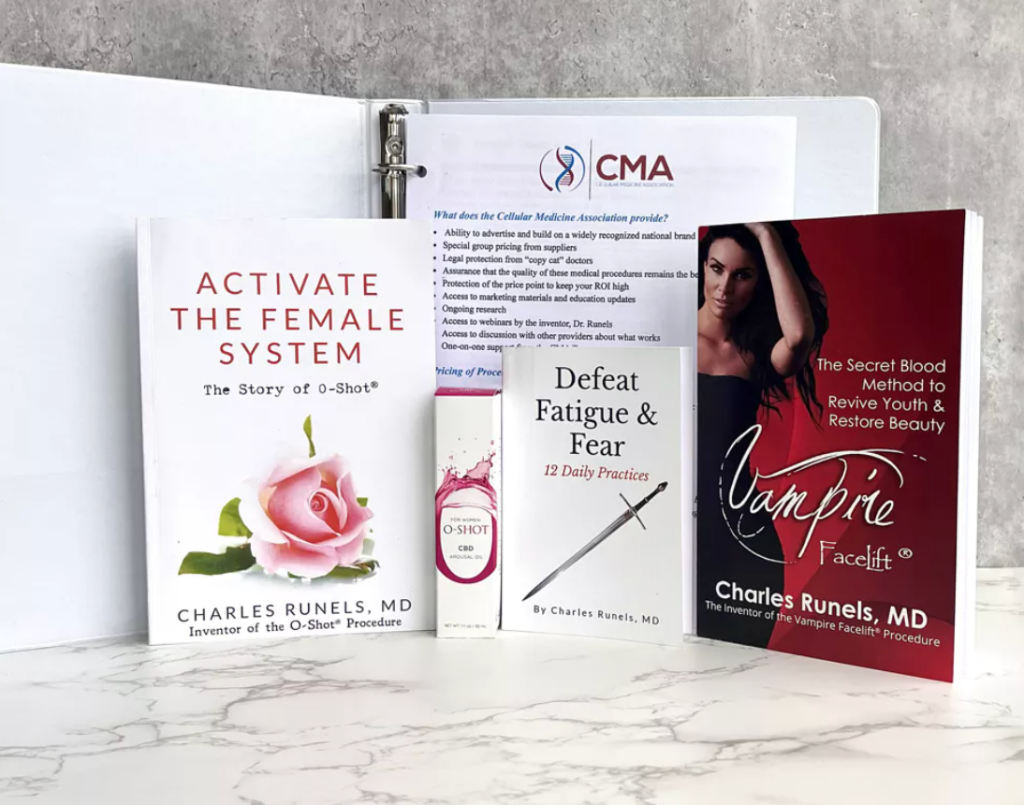
=>Benefits of the Cellular Medicine Association<=
=> Apply for Online Training for Multiple PRP Procedures<=
=>Next Hands-On Workshops with Live Models<=
References
Braga, Andrea, Howard B. Goldman, Anna Padoa, and Maurizio Serati. “Navigating the Challenges of Overactive Bladder Management in Women.” World Journal of Urology 44, no. 1 (2026): 400. https://doi.org/10.1007/s00345-026-06471-5.
Kanojia, Neha, Geeta Deswal, Ajmer Singh Grewal, et al. “Advances in Microneedle Technology for Targeted Therapy in Alzheimer’sand Parkinson’s Disease.” Current Drug Delivery 23 (April 2026). https://doi.org/10.2174/0115672018425956260117232402.
Levine, Laurence A. “Peyronie’s Disease: Contemporary Review of Non-Surgical Treatment.” Translational Andrology and Urology 2, no. 1 (2013): 39–44. https://doi.org/10.3978/j.issn.2223-4683.2013.01.01.
Miller, Jake A., Muhammed A. Moukhtar Hammad, Lucas G. C. R. De Amorim, et al. “Efficacy and Safety of Collagenase Clostridium Histolyticum in Men Who Have Sex with Men.” Sexual Medicine 14, no. 3 (2026): qfag028. https://doi.org/10.1093/sexmed/qfag028.
Moghalu, Odinachi I., Rupam Das, Joshua Horns, Alexander Campbell, James M. Hotaling, and Alexander W. Pastuszak. “Regional Variation in the Incidence and Prevalence of Peyronie’s Disease in the United States—Results from an Encounters and Claims Database.” International Journal of Impotence Research 34, no. 1 (2022): 64–70. https://doi.org/10.1038/s41443-020-00363-x.
Raheem, Amr Abdel, Giulio Garaffa, Tarek Abdel Raheem, et al. “The Role of Vacuum Pump Therapy to Mechanically Straighten the Penis in Peyronie’s Disease.” BJU International 106, no. 8 (2010): 1178–80. https://doi.org/10.1111/j.1464-410X.2010.09365.x.
Sarna, Shiv, Karl H. Pang, Andrew N. Christopher, David J. Ralph, Asif Muneer, and Hussain M. Alnajjar. “Plaque Incision and Grafting for Peyronie’s Disease: 15-Year Experience and Functional Outcomes from a High-Volume Andrology Centre.” International Journal of Impotence Research, ahead of print, June 1, 2026. https://doi.org/10.1038/s41443-026-01296-7.
Vaseli, Hediyeh, Abdul Aziz Abdul Ghafoor, Mahan Maazi, and Jeffrey Donovan. “Hair Loss in Patients With Attention-Deficit/Hyperactivity Disorder: A Systematic Review.” Journal of Cutaneous Medicine and Surgery, May 31, 2026, 12034754261455477. https://doi.org/10.1177/12034754261455477.
Virag, Ronald, Hélène Sussman, Sandrine Lambion, and Valérie de Fourmestraux. “Evaluation of the Benefit of Using a Combination of Autologous Platelet Rich-Plasma and Hyaluronic Acid for the Treatment of Peyronie’s Disease.” Sexual Health Issues 1, no. 1 (2017). https://doi.org/10.15761/SHI.1000102.
Wanitphakdeedecha, Rungsima, Ma. Patricia Gertrude Camille Rojas Ollero, Woramate Bhorntarakcharoen, et al. “Efficacy and Safety of Photothermal Biomodulated Platelet-Rich Plasma versus Standard Platelet-Rich Plasma for Facial Rejuvenation: A Prospective Split-Face Randomized Study.” Scientific Reports, ahead of print, June 1, 2026. https://doi.org/10.1038/s41598-026-54310-9.
Helpful Links
=> Next Hands-On Workshops with Live Models <=
=>Next Hands-On Training with Live Models with Dr. Runels (includes marketing)<=
=>Hands-On Botulinum Toxin Workshop That Teaches Medical & Cosmetic Uses<=
=> Dr. Runels Online Botulinum Blastoff Course <=
=> The Cellular Medicine Association (who we are) <=
=> Apply for Online Training for Multiple PRP Procedures<=
=> FSFI Online Administrator and Calculator <=
=> 5-Notes Expert System for Doctors<=
=> Help with Logging into Membership Websites<=
=> The software I use to send emails: ONTRAPORT (free trial)<=
1Kanojia et al., “Advances in Microneedle Technology for Targeted Therapy in Alzheimer’s and Parkinson’s Disease.”
2Kanojia et al., “Advances in Microneedle Technology for Targeted Therapy in Alzheimer’s and Parkinson’s Disease.”
3Miller et al., “Efficacy and Safety of Collagenase Clostridium Histolyticum in Men Who Have Sex with Men.”
4Virag et al., “Evaluation of the Benefit of Using a Combination of Autologous Platelet Rich-Plasma and Hyaluronic Acid for the Treatment of Peyronie’s Disease”; Levine, “Peyronie’s Disease: Contemporary Review of Non-Surgical Treatment.”
5Moghalu et al., “Regional Variation in the Incidence and Prevalence of Peyronie’s Disease in the United States—Results from an Encounters and Claims Database.”
6Sarna et al., “Plaque Incision and Grafting for Peyronie’s Disease.”
7Raheem et al., “The Role of Vacuum Pump Therapy to Mechanically Straighten the Penis in Peyronie’s Disease.”
8Wanitphakdeedecha et al., “Efficacy and Safety of Photothermal Biomodulated Platelet-Rich Plasma versus Standard Platelet-Rich Plasma for Facial Rejuvenation.”
9Vaseli et al., “Hair Loss in Patients With Attention-Deficit/Hyperactivity Disorder.”
10Braga et al., “Navigating the Challenges of Overactive Bladder Management in Women.”
|
Charles Runels, MD 888-920-5311 CellularMedicineAssociation.org |
Disclaimer
*This page is intended solely as professional education for licensed healthcare providers. It is not medical advice, not patient-directed advertising, and not an offer to treat any individual. Nothing here should be used by a member of the public to diagnose or treat any condition; patients should consult a qualified, licensed physician about their own care. The procedures and platelet-rich plasma (PRP) applications discussed are investigational and/or off-label. They have not been evaluated or approved by the U.S. Food and Drug *Administration (FDA) for the uses described, and the FDA has not approved PRP or these procedures to diagnose, treat, cure, or prevent any disease (partly because PRP is a blood product that belongs to the patient, not a drug, and is not regulated by the FDA). References to the O-Shot®, P-Shot® (Priapus Shot®), Clitoxin®, Vampire Facial®, Vampire Facelift®, and other trademarked procedures describe training methods and clinical approaches; they do not imply FDA clearance or guaranteed outcomes.
*The content reflects a review of the published literature and the clinical opinions and experience of the author. Comparisons to FDA-approved drugs or surgical options (for example, references to a procedure as “first-line”) represent the author’s interpretation of the cited studies and individual clinical judgment — not established medical consensus or proof of superiority, safety, or efficacy. Individual results vary, and no specific outcome is promised or guaranteed. Statements regarding the absence of reported adverse events reflect the limits of the available evidence base and should not be read as proof of zero risk.
*Any clinical decision remains the sole responsibility of the treating licensed provider, who must exercise independent professional judgment, obtain appropriate informed consent, and comply with all applicable laws, regulations, and standards of care in their jurisdiction. The author and the Cellular Medicine Association assume no liability for actions taken based on this information.

[…] Ongoing Research<– […]